
Why good employees leave water utilities — and how to make them stay
You’ve done the hard work of hiring someone. They’ve completed onboarding, learned your systems, toured the facilities, and met the team. Now comes the question that should keep every utility leader up at night: What’s going to make them stay?
People rarely leave for more money. They leave because nobody noticed their work. They leave because they feel stuck. They leave because the culture grounds them down until they stopped caring.
Fix those things, and you don’t just reduce turnover — you build the kind of organization people actively choose to stay in. What follows are strategies to help you build exactly that.
They need to feel seen.
Water agencies run on a “no news is good news” culture: If nothing went wrong and the water flowed, it was a good day. But employees — especially those earlier in their careers — need to know their work is noticed.
That doesn’t mean elaborate award ceremonies. It means a supervisor who watches an employee handle a difficult situation well and says so, specifically, in front of others. (Example: A manager calls out in a team meeting a major pipe break repair that was handled in record time.) It also means leadership that connects the daily grind to the bigger picture: clean, safe water delivered, a community protected, infrastructure that will outlast all of us. Your people are doing genuinely important work. Tell them that — specifically, often, and in settings where others can hear it.
They need to see a future.
One of the most common reasons mid-career employees leave utilities is the feeling of being stuck. Water utilities have a structural advantage here: operator certification ladders, supervisory tracks, cross-training opportunities, project leadership roles. The problem is these pathways exist on paper but rarely come up in conversation. Opportunities may not be clear or transparent.
Managers need to be actively talking with employees about where they want to go and how to get there — and then helping remove the barriers along the way. Career development isn’t an HR formality; it’s one of the most direct retention tools a manager has. If someone can see a future at your utility, they stay.
They need a culture that doesn’t burn them out.
Operators and field crews face long shifts and middle-of-the-night calls. Customer service staff absorb complaints all day. Middle managers are pulled simultaneously by leadership above and teams below. In every role, the pressure can compound — and a culture that normalizes that grind without acknowledgment isn’t resilient; it’s fragile.
The utilities that keep their best people create space to raise concerns, distribute on-call burdens fairly, and invest in technology and processes that eliminate unnecessary drudgery. When people feel the organization is working to make their jobs sustainable, they notice.
They need you to know them as individuals.
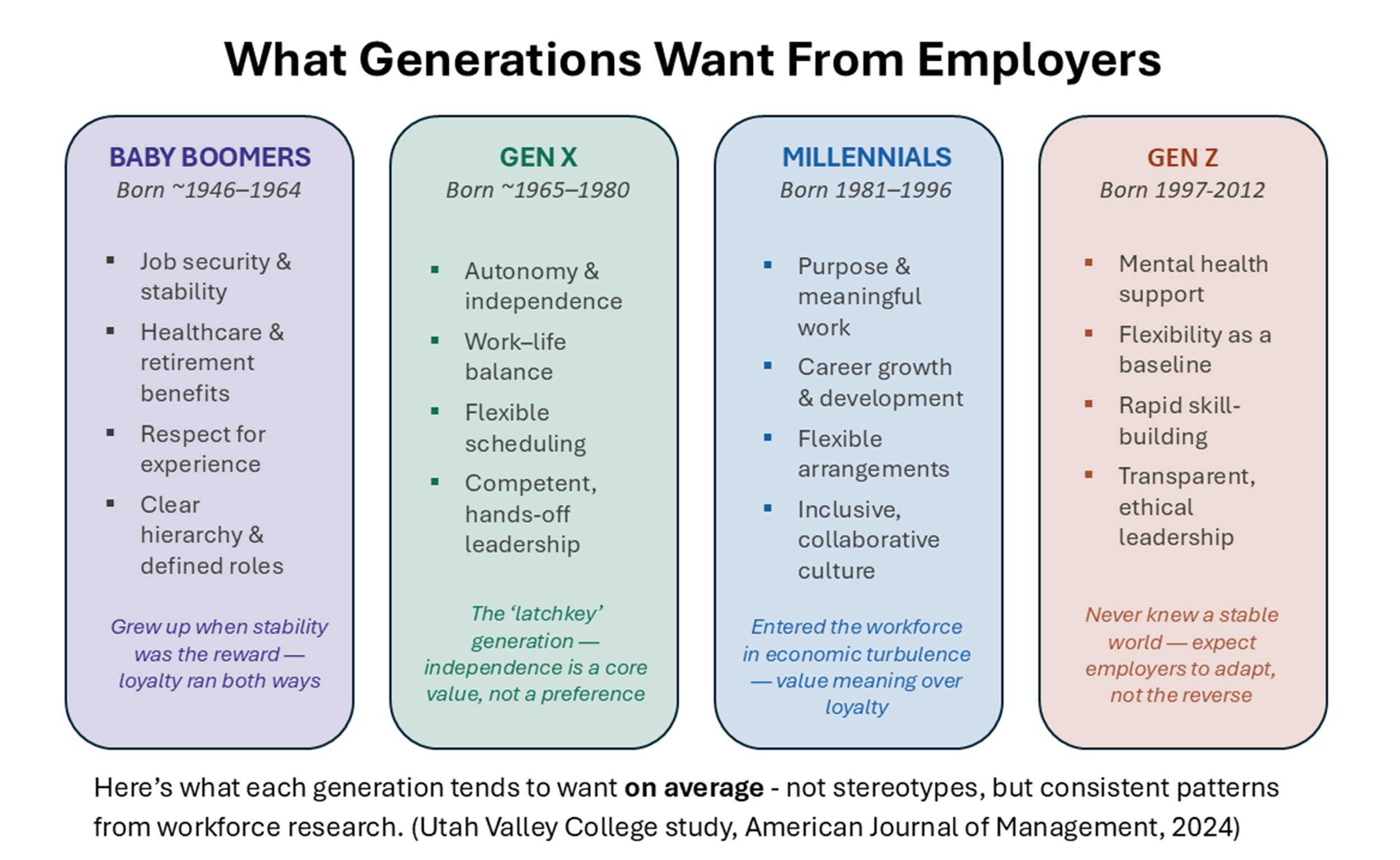
It’s tempting to manage by generational label — millennials want this, boomers want that. While there are some useful indicators in research, you need to learn more about your individual people. Your workforce isn’t monolithic, and assumptions based on age may lead you astray.
A 29-year-old engineer and a 54-year-old plant supervisor are in completely different life stages with different priorities. One may be hungry for fast skill development and schedule flexibility. The other may want their expertise formalized through mentorship and a clear, dignified path toward retirement. The only way to know what someone needs is to ask them — and then to listen.
Different generations have different motivations in the workplace.
Real retention conversations, held one-on-one, will do more than any organization-wide program or employee appreciation campaign.
The utilities losing good people aren’t just losing them to higher salaries elsewhere. They’re losing them to organizations that made people feel valued, challenged, and respected.
That part is entirely within your control.